"drug use, data analysis"
- InFarmaco Progetto AIFA-Regioni sull’informazione indipendente sul farmaco. Il Progetto COSIsiFA, che coinvolge tutte le Regioni e le Province autonome, mira all’informazione e formazione indipendente sul farmaco rivolta sia ai cittadini sia agli operatori santari. I molti obiettivi del progetto saranno raggiungibili grazie al coinvolgimento di una sessantina di strutture sanitarie su tutto il territorio nazionale.
- Consilium Scientific (Consilium Scientific is an independent non-profit organisation aiming to improve clinical research through scientific rigour and transparency)
- NCCN 2024 pharmacy updated: a webinar series (The rapid integration of new therapeutic agents into treatment for various types of cancer can be challenging for clinicians. Cancer treatment is constantly evolving, and it is crucial for health care professionals to stay up to date with the latest developments in the field. Pharmacists are critical to educating the interprofessional oncology care team about the actions and potential adverse events associated with new and existing therapeutic options. Pharmacists also have an important role in patient safety, education, and quality of care, as well as subsequent monitoring and management of treatment-related toxicities.)
- NCCN evidence blocks (NCCN Evidence Blocks™ are intended as a visual representation of five key measures that provide important information about specific systemic therapy recommendations contained within the NCCN Guidelines.)
- ISOPP join for NO fee (International Society of Oncology Pharmacy Practitioners join and make connections with oncology pharmacy professionals who are part of healthcare teams involved in cytotoxic preparation services, clinical pharmacy services, cancer prevention, treatment, supportive care, and symptom management. You will be joining a global community that is at the forefront of efforts to prevent and manage toxicities associated with cancer treatment. You will also meet like-minded professionals involved in clinical and laboratory-based research, education and management)
- The ESMO magnitude of clinical benefit scale (The ESMO-MCBS was developed to promote the scientific integrity of ESMO and of oncologists and in particular to Reduce bias in data interpretation and analysis and enhance critical appraisal to the evidence, Reduce hype, Provide robust validation with strict adherence to standards for “accountability for reasonableness”, Provide reliable and fair evaluation of benefit to assist in cancer planning, value-based priority-setting and impact-oriented resource allocation decisions. Since value is based on considerations of the magnitude of clinical benefit as well as cost, and given the challenges to understanding the actual magnitude of the clinical benefit, the ESMO-MCBS was developed in 2015 as a validated and reproducible scale that is applicable across the full range of solid tumours and since 2023 in hematological malignancies)
- the WHO ATC/DDD methodology (Drug Utilization Research (DUR) uses the Anatomical Therapeutic Chemical (ATC) as the classification system and the Defined Daily Dose (DDD) as a unit of measure. The ATC classification system groups the active medical substances according to the organ or system on which they act and according to their therapeutic, pharmacologic and chemical properties. The DDD is a unit of measurement and is linked to the ATC code. The definition of the DDD is: The assumed average maintenance dose per day for a drug used for its main indication in adults.)
- Navigating the medication adherence reporting (This article highlights the challenges in standardizing adherence methoIdologies, minimum methodology considerations that should be reported with MPR and PDC results, and key elements to consider when interpreting and applying adherence results. Further, recommendations are provided to promote a more consistent description of calculation methods and to aid pharmacies in adherence measure analysis, interpretation, and application to practice, with a focus on specialty pharmacy programs)
- Time to treatment discontinuation (TTD) as a pragmatic endpoint in metastatic non-small cell lung cancer (mNSCLC): A pooled analysis of 8 trials. (TTD is strongly correlated with PFS in contemporary trials of pts with mNSCLC, particularly those treated with TKI or ICI. Among pts treated with TKI or ICI, TTD exceeds PFS by > 3 months in several cases. These results indicate a need for further investigation of TTD across cancers and treatments to assess its role as an endpoint in RWE studies.)
- A Machine Learning Approach to Real-World Time to Treatment Discontinuation Prediction (This study establishes a generic pipeline for real-world time on treatment prediction, which can be extended to any base machine learners and drugs.)
- Prescrire International (Prescrire is a non-profit organization set up to provide health professionals – and via them, patients – with the clear, succinct and reliable information they need, in particular in the form of critical analyses of the evaluation of new drugs and diagnostic or therapeutic strategies.)

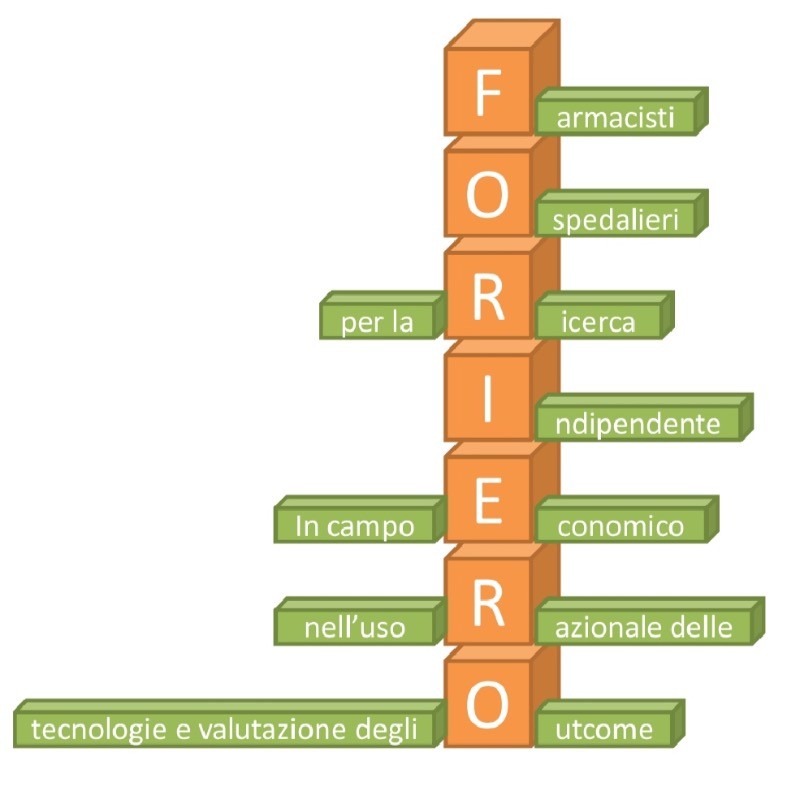
 FORIERO